
06th
Jan 2026
EVENT | In Conversation with Justice Zak Yacoob: The Role of Law in Effective Social Change
A conversation with Justice Zak Yacoob, Former Judge of the Constitutional Court of South Africa, held on the 6th of January, 2026 at Bangalore International Centre. The discussion was moderated by Jayna Kothari, Senior Advocate, Supreme Court of India, and Executive Director, CLPR.
Justice Yacoob served as a Judge of the Constitutional Court of South Africa from 1998 to 2013. Before he joined the Constitutional Court, he was a practicing advocate and an anti-apartheid activist, and played a direct role in shaping South Africa’s constitutional future. His judgments are especially noted for advancing socio-economic rights, substantive equality, disability justice and transformative constitutionalism.
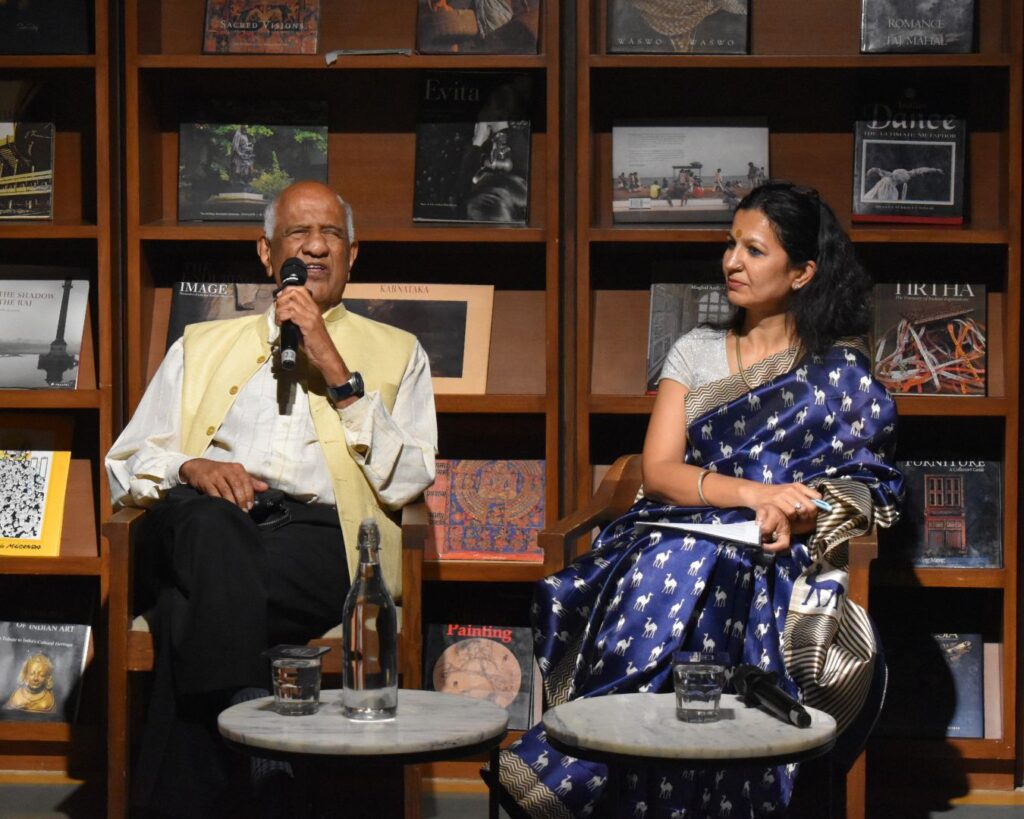
Justice Zak Yacoob was in conversation with Senior Advocate Jayna Kothari, where he drew on his experiences as an anti-apartheid activist, advocate, constitutional drafter, and judge to reflect on law, disability, constitutional interpretation, and the role of courts in addressing inequality and structural injustice.
Justice Yacoob began by speaking about his involvement in the anti-apartheid movement as a student in the early 1970s and his early engagement with underground political organising. These experiences, he noted, shaped his understanding of law not as a neutral system, but as an instrument embedded in social and political power. Speaking to this he reflected on his early years in legal practice, he described how apartheid-era governments frequently relied on legal frameworks to legitimise repression, while lawyers and activists sought to use contradictions within the legal system to challenge state action. To this end he suggested that law, often functioned as a “double-edged sword”, capable of both enabling injustice and resisting it.
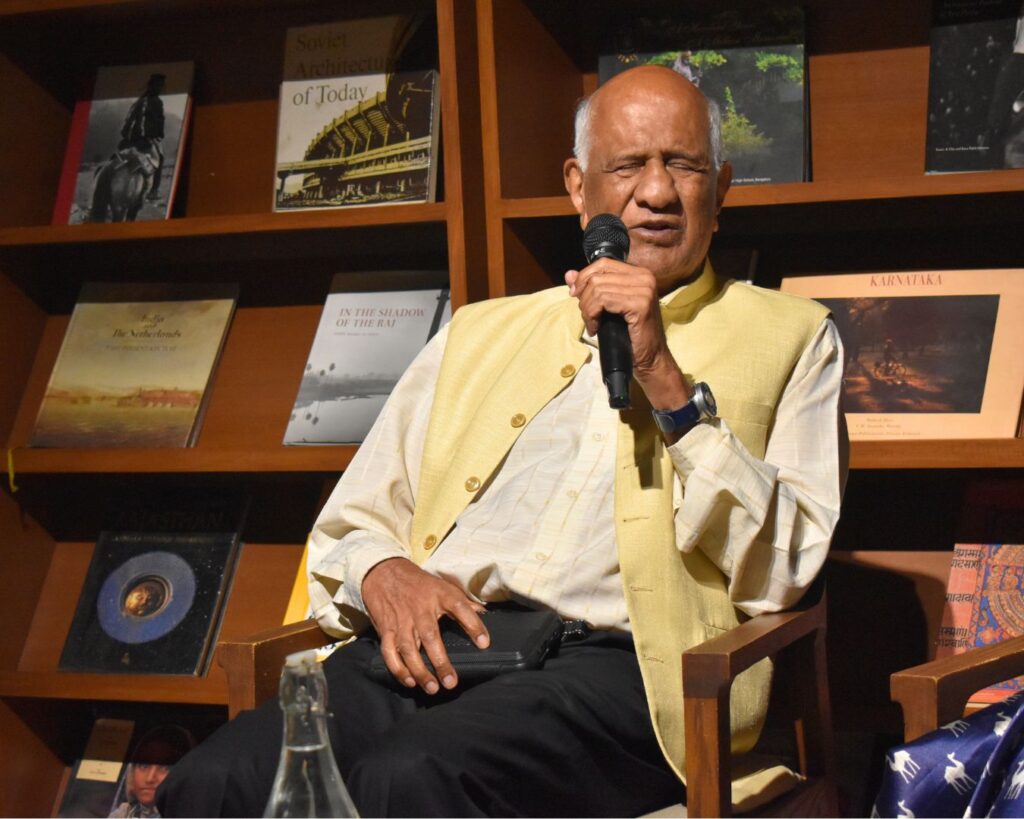
Justice Yacoob worked on the Constitutional Court in South Africa from 1998 to 2013. Speaking about this time, he spoke of the role of judges in deeply unequal societies. He emphasised that while judges are trained to apply legal principles independently of opinion, judicial decision-making cannot be detached from social context. Courts, he argued, must remain attentive to the lived realities of those affected by their decisions while remaining committed to constitutional principles and legal discipline. He, also, addressed the influence of public opinion, he noted that while courts cannot ignore prevailing public sentiment, it cannot be decisive where fundamental rights are concerned, and judges must balance public pressures with constitutional commitments to equality and dignity.
A significant portion of the discussion focused on disability and equality. Cautioning against treating disability as a uniform category, he emphasised that different disabilities create different forms of exclusion and therefore require different forms of accommodation. Drawing from his own experiences, he spoke about the importance of reasonable accommodation, institutional support, and access to assistive technologies, as well as the need for broader social and institutional change to ensure meaningful participation for persons with disabilities. He further reflected on how discrimination can operate across and within marginalised groups, underscoring the need to address inequality in a holistic manner.
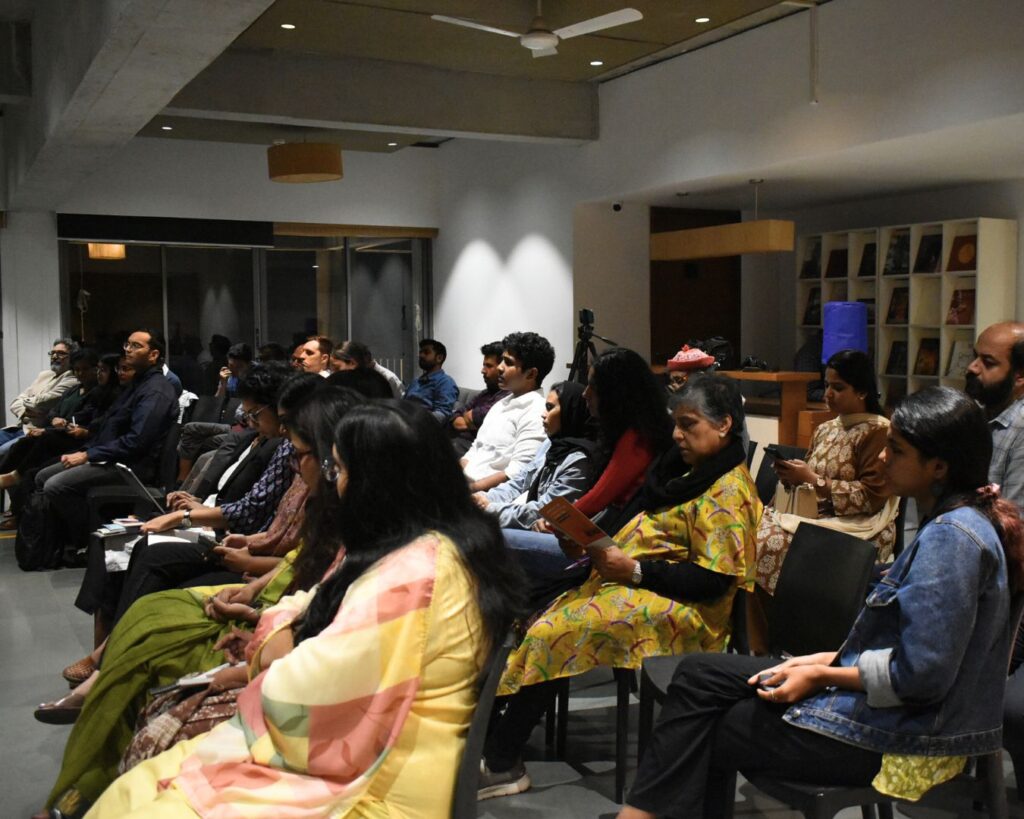
Justice Yacoob spoke of his role in the drafting of South Africa’s Constitution and on the possibilities and limitations of having a relatively young constitutional framework. He rejected originalist approaches to interpretation, arguing that constitutions must be understood in relation to historical experience, social context, and evolving understandings of equality and justice. South Africa’s constitutional framework, he noted, was shaped both by the country’s experience of apartheid and by comparative constitutional traditions, and constitutional meaning must continue to develop through interpretation and institutional practice.
The conversation returned repeatedly to the question of how law operates in people’s everyday lives. Justice Yacoob emphasised that constitutional rights do not give effect to themselves, and that their meaning depends on how courts, institutions, and society engage with them in practice. Across themes of socio-economic rights, disability, equality, and constitutional interpretation, the discussion underscored both the limits of law as a tool for social change and the possibilities that emerge when constitutional commitments are interpreted considering lived conditions and structural inequality.
Time 6 pm
Venue The Library, Bangalore International Centre