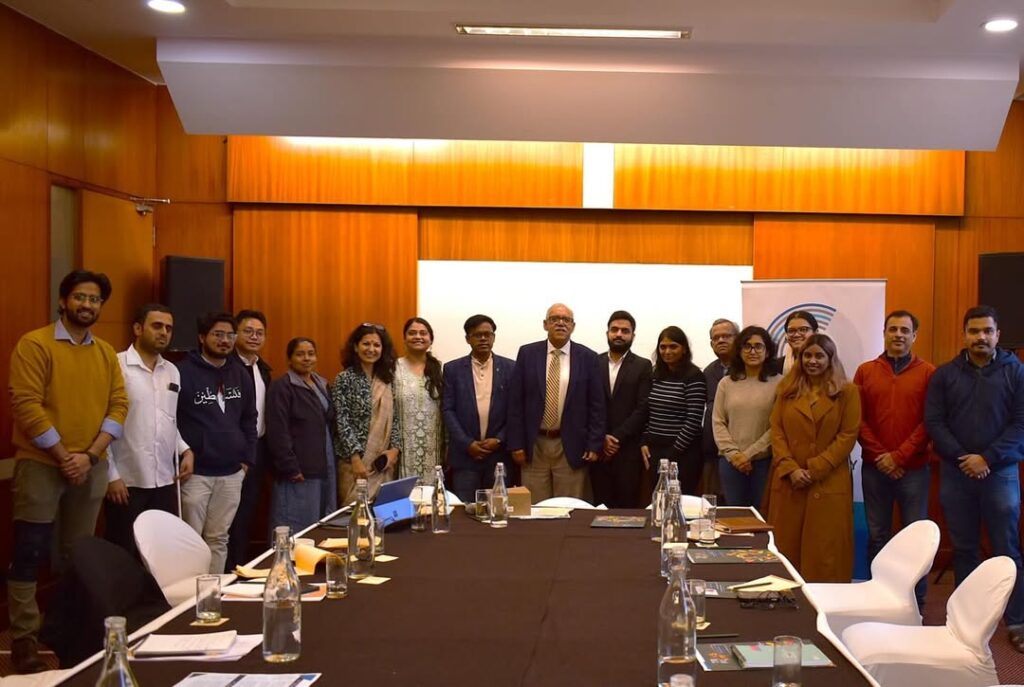
From 5th to 7th December 2025, the Centre for Law and Policy Research (CLPR) organised a three-day training for the Constitution Defender Fellows on public interest lawyering, caste-based discrimination and transgender rights. The workshop, held in Delhi, brought together fellows from across the country to reflect on how law can be used to challenge structural discrimination and to design more effective strategies for public interest litigation.
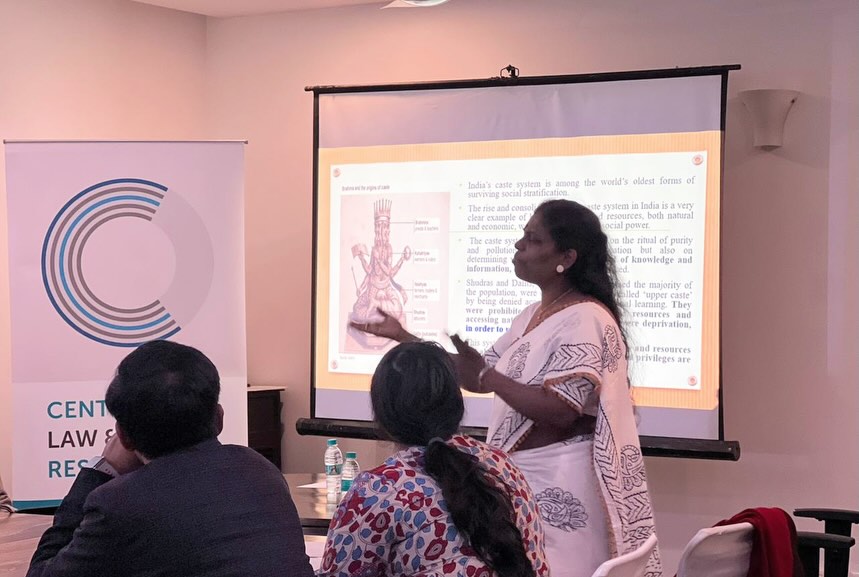
On Day 1, the workshop focused on deepening the participants’ understanding of caste oppression as a lived social structure and the legal framework that seeks to dismantle it. The first session was led by Abirami Jotheeswaran, General Secretary of the National Campaign on Dalit Human Rights (NCDHR). She provided a socio-historical overview of caste as a graded hierarchy designed to control labour, mobility, and dignity. Drawing on Dr. Ambedkar’s, she emphasised caste as a psychological institution, “a state of mind”, embedded in everyday practices even after formal abolition. Even today, there are over 154 documented forms of untouchability. She also highlighted Dalit women experience compounded exploitation within Brahmanical patriarchy.
Building on this, Jayna Kothari, Senior Advocate & Executive Director, CLPR introduced the Scheduled Castes and Scheduled Tribes (Prevention of Atrocities) Act, 1989, explaining how it differs from ordinary criminal law by recognising caste atrocities as violations rooted in social dominance and historical oppression. She highlighted range of offences under Section 3, from humiliation and land dispossession to sexual violence, and highlighted the duties imposed on public servants under Section 4.
Jayna also examined whether these protections translate into justice on ground, noting persistent gaps in implementing Special Courts, time-bound trials, and the victim and witness rights framework under Section 15A. She discussed landmark judgments that have diluted protections such as “public view” and pressure to allow anticipatory bail highlighting the need for constant vigilance in both litigation and policy spaces.
The final session led by Edwin, Director of the Human Rights Advocacy and Research Foundation, presented a citizens’ audit of PoA implementation exposing major gaps. Drawing on NCRB data and union compliance reports, he demonstrated how official statistics obscure the scale of violence: over 1.26 million recorded atrocities, more than 1,000 murders and over 5,000 rapes annually for several years, yet conviction rates remain extremely low with trial pendency stretching up to 13–15 years. He highlighted Vigilance and Monitoring Committees and protection cells remains largely non-functional across states, and more than 734 crores in statutory relief remains undistributed. The session highlighted the implementation failure that continue to undermine the Act’s protective framework.
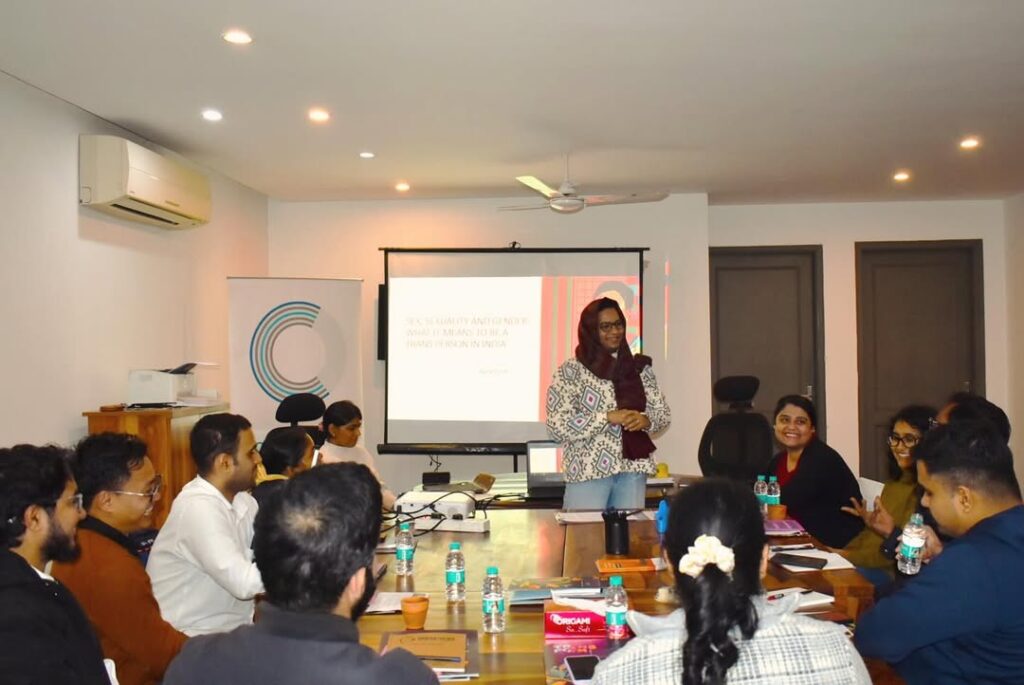
Day 2 focused on strengthening fellows’ understanding of gender diversity and the legal rights of transgender persons. The day began with a session by Dr Aqsa Shaikh, Professor of Community Medicine at Hamdard Institute of Medical Sciences and Research. She explained the distinction between biological sex and gender as a psychological and social identity. She highlighted the everyday realities faced by transgender and gender-diverse persons, including high levels of violence, stigma in schools and workplaces, and barriers to both general and gender-affirming healthcare. Drawing on public health research, she explained how the absence of reliable data renders transgender communities statistically invisible, enabling state neglect. Aqsa also stressed the importance of simple practices such as asking and sharing pronouns that can make institutions safe and respectful.
In the next session Nithya Rajshekhar, Sr. Research Associate, CLPR, introduced the structure of the Transgender Persons (Protection of Rights) Act, 2019 and the Rules. She explained the Act’s guarantee of self-perceived gender identity and walked the fellows through the process of obtaining identity certificates. .Nithya discussed the Act’s anti-discrimination mandates in education, employment, healthcare and access to public spaces, and the obligations on establishments to create inclusive environments. Fellows described widespread implementation failures, including unlawful medical requirements by District Magistrates, delays in certification, and officials unaware of the National Portal. Participants noted the lack of enforcement against institutions that continue to discriminate, revealing the gap between the Act’s promises and its lived realities.
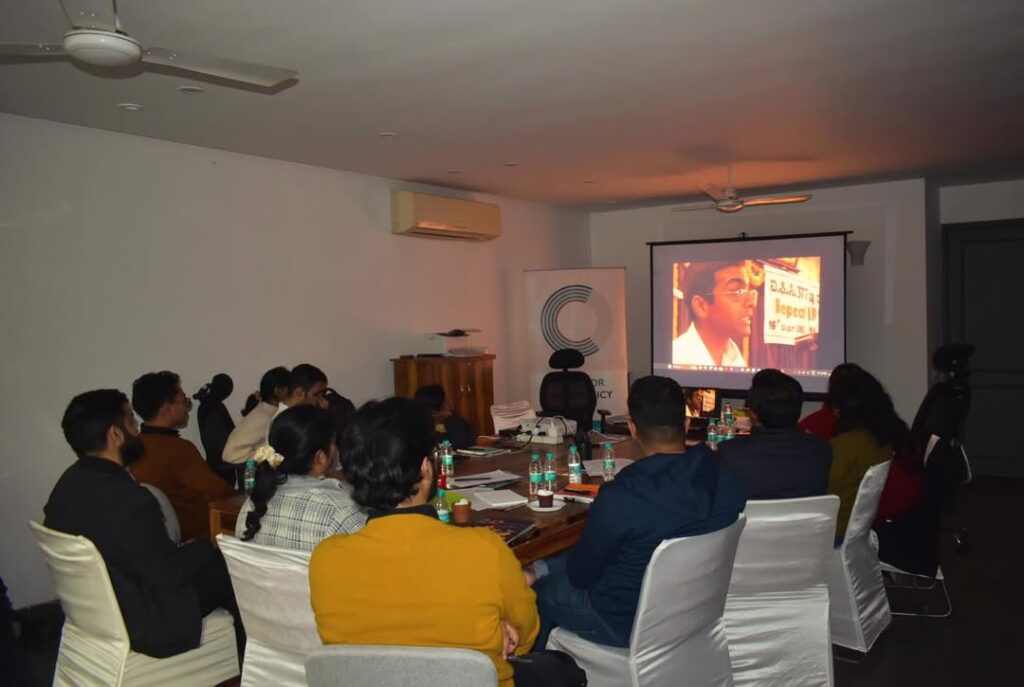
The group then watched Amma’s Pride, demonstrating a mother’s support for her transgender daughter as she fought for state recognition of her marriage in a traditional small town in South India. e. Following the movie screening, Jayna discussed a jurisprudential overview of transgender rights litigation, tracing developments from NALSA v. Union of India to the recent decision in Jane Kaushik v. Union of India. She discussed NALSA’s affirmation of self-determined gender identity, Navtej Singh Johar v. Union of India case strengthening of privacy and intimate partner choice and, High Court decisions on name and gender change. She also examined marriage equality cases, including Arun Kumar & ors v. the inspector general of registration & ors and the implications of Supriyo & Ors. v. Union of India. Moving to workplace equality, she outlined cases requiring reasonable accommodation and inclusion of non-binary persons. Jayna concluded with Jane Kaushik, where the Supreme Court recognised the State’s failure to implement the TG Act as “omissive discrimination” and issued enforceable directions to remedy systemic shortcomings.
The day ended with a screening of ‘Many People, Many Desires’, short film exploring sexuality, gender identity, and human rights, reinforcing the complex and intersecting challenges faced by LGBTQIA+ communities in India. The final day focused on building fellows’ capacity to use public interest litigation strategically to advance constitutional rights. Justice (Retd.) Deepak Gupta, former Judge of the Supreme Court, drew on his judicial career to explain the original purpose of PILs as a tool to ensure access to justice for those excluded from the legal system. He stressed that the “P” in PIL must always stand for Public, not publicity or political motives, and that PILs should amplify the voices of those who cannot reach the courts themselves.
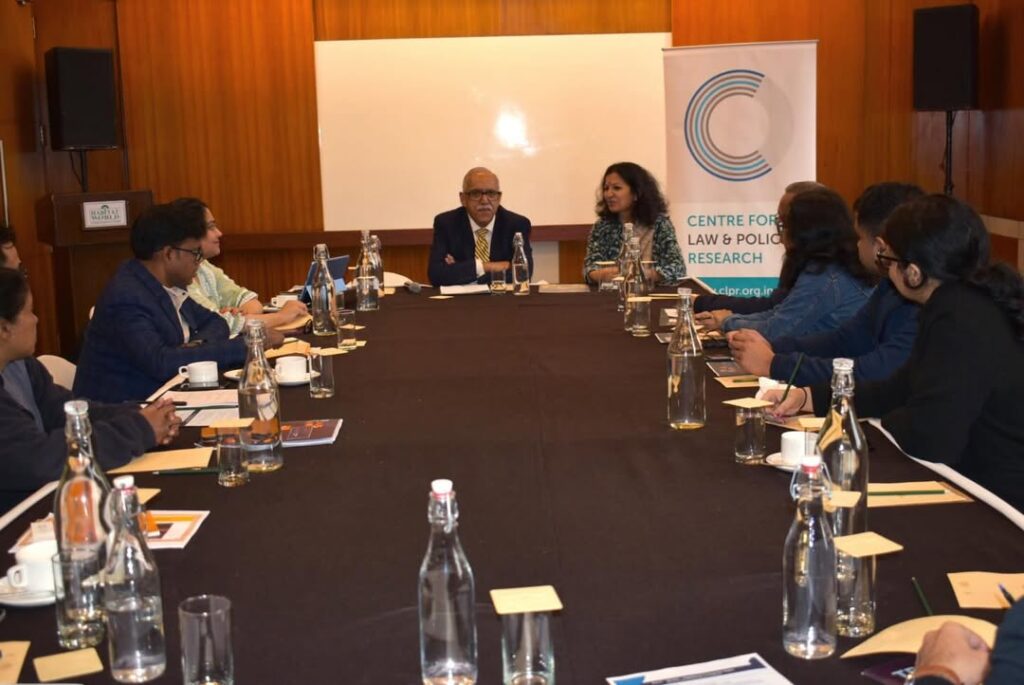
Justice Gupta reflected on key moments from his tenures, including his environmental and land rights judgements and long running T.N. Godavarman Thirumulkpad v. Union of India , demonstrating the court can safeguard natural resources as public trust assets. He also highlighted the role of PIL in advancing disability rights, and discussed his decision in Independent Thought v. Union of India, where SC read down marital rape immunity for minor wives to uphold the right to life and bodily integrity. .
Offering guidance, he reminded fellows that PIL must be grounded in credible evidence rather than vague allegations, and that maintaining the integrity of the process is essential. He also addressed contemporary challenges including rising Political Interest Litigation and insensitive public discourse around refugees, emphasising that constitutional protections apply to all persons.
The training concluded with an engaging discussion where fellows shared their own experiences pursuing public interest cases in different states. Justice Gupta encouraged them to pursue litigation not just for declarations of rights but for structural change through monitoring and social evidence. His remarks reinforced that litigation bridges constitutional values with the lived experiences of marginalised communities.